
Journal
Are Smart Locks Safe? Security Questions Answered Honestly
Hacking, flat batteries, lockouts and privacy. The worries people actually have about smart locks and cameras, answered straight.
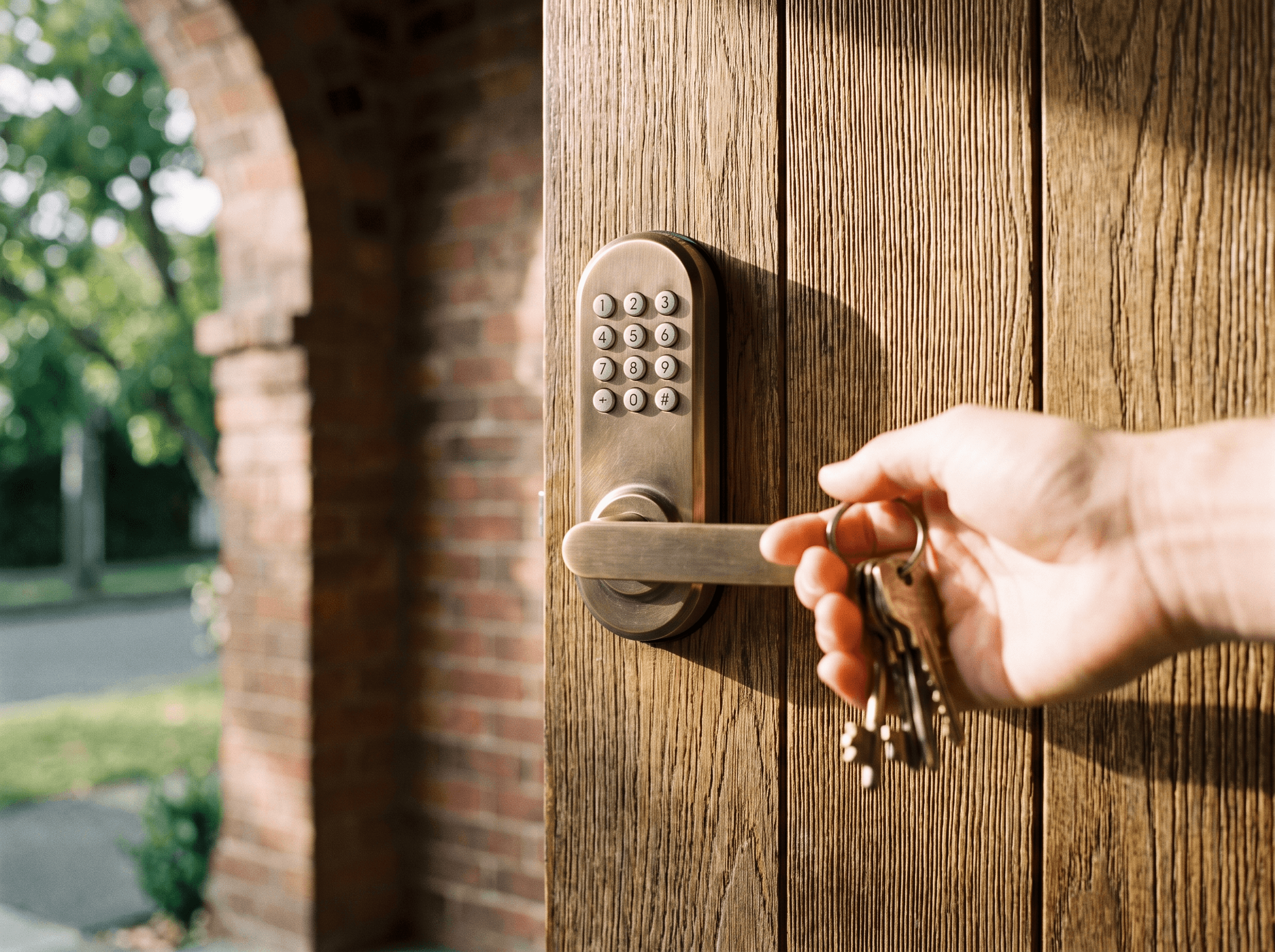
Quality smart locks from established brands, properly installed, are at least as secure as the standard locks they replace, and in day to day use they are often more secure, because doors stop being left unlocked. The genuine risks are not Hollywood hacking; they are cheap no name hardware, reused passwords and codes shared once and never changed. All three are avoidable.
It is a fair question to ask, and the fact that you are asking it is healthy. Here are the worries we hear most, answered straight.
Can smart locks be hacked?
In principle, any electronic device can be attacked. In practice, reputable smart locks use the same grade of encryption as internet banking, and there is no meaningful pattern of Australian burglaries happening through lock hacking. Burglars overwhelmingly use the old methods: an unlocked door, a weak frame, a side window. A determined attacker with physical access and time is a threat to every lock ever made, including the brass one you have now.
Where electronic risk actually lives is around the lock, not inside it: a weak account password, a guest code given to a cleaner three years ago, a bargain lock from a brand nobody can pronounce. The fixes are unglamorous and effective: reputable hardware, a strong unique password with two factor authentication, and codes treated like keys, issued per person and deleted when no longer needed. A professionally configured system does this housekeeping by design.
What happens if the battery dies?
Nothing dramatic. Smart locks warn you for weeks as the battery runs low, through the app and on the lock itself, and batteries typically last six to twelve months. If a lock is ignored all the way to flat, every good model has a fallback: a physical key override, external contacts for a nine volt battery to wake it up, or both. You do not get locked out by a battery; you get nagged by one.
Can I get locked out?
It is less likely than with ordinary keys, which is the part people do not expect. A smart lock offers several ways in: a code, a phone, a fingerprint on some models, a physical key as backup, and remote unlocking for family. Losing your keys stops being an event. The lockout stories that do the rounds are almost always cloud only budget locks; quality locks work locally at the door whether or not the internet is up.
Do security cameras deter crime?
Visible cameras genuinely deter opportunistic crime, which is most residential crime; a burglar choosing between two houses reliably picks the one not watching them. What cameras do not do is physically stop anyone, which is why they work best as one layer among several: solid locks, sensible lighting, and a system that notices and reacts. A home where the lights respond, the cameras watch and everything looks occupied is simply a poor target. That layered approach is the whole philosophy of our security and surveillance page.
Where video intercoms fit
A video intercom is the most quietly useful security device on the market. See and speak to whoever is at the door or gate from your phone, wherever you are: the delivery driver gets told where to leave the parcel, the stranger gets a response from an apparently occupied house, the kids see who it is before opening the door. Paired with a smart lock, you can identify someone and let them in remotely, which changes daily logistics for deliveries, cleaners and grandparents. For homes with gates, an intercom at the boundary keeps the conversation at the boundary. More on our clever access page.
The layered security checklist
No single device secures a home. A layered setup does, and it is worth seeing the layers in one place.
Solid physical hardware first: quality deadbolts and sound frames, smart or otherwise. Electronics on a weak door protect a weak door.
A video intercom at the main entry, so the door is answered on your terms, from anywhere.
Cameras covering the approaches, visible enough to deter, positioned to protect entries rather than watch living spaces.
Lighting that makes the home look occupied, because an occupied looking home is the least attractive target on the street.
Everything on one system, so a triggered sensor can turn on lights, start recording and notify you in the same moment.
Account hygiene: unique passwords, two factor authentication, and guest codes issued per person and deleted when done.
Most homes have one or two layers. The step change in real security, and in peace of mind, comes from having them all, working together, which is exactly what the CleverMate Hub is there to do.
What about privacy?
The honest answer: it depends on the products and the setup, which is exactly why both deserve thought. Choose brands with a real privacy policy and a track record; prefer systems that store and process footage locally where possible; put cameras where they protect entries rather than watching living spaces; and secure the accounts properly. A security system should protect your family from the world, not describe your family to it, and it can be configured to do exactly that. It is one of the topics we walk through openly in a free consultation.
Frequently asked questions
Are smart locks safer than normal locks?
Mechanically they are comparable, since quality smart locks are built on solid deadbolt hardware. Behaviourally they are usually safer: doors lock themselves, you can check them from anywhere, and there are no keys under the doormat. The caveat is quality; this is not the product category for the cheapest option on a marketplace.
What happens to a smart lock if the wifi drops?
It keeps working. Codes, fingerprints and physical keys all work at the door without any internet. What you lose until the connection returns is the remote part: checking and controlling the lock from outside the house.
Can I still use a normal key?
With most quality smart locks, yes, there is a traditional keyway as backup, and models without one provide a powered override instead. Many households keep one physical key in a safe place and never touch it again.
Who can see my camera footage?
By default, only the accounts you authorise, and with locally stored systems the footage need never leave your home at all. The practical safeguards are a reputable brand, a strong unique password, two factor authentication and a sensible sharing setup, all of which are part of a professional configuration.
Do smart locks work in a power cut?
Yes. Smart locks run on their own batteries, not mains power, so a blackout does not affect them at the door. What a power cut can interrupt is remote access, and even then codes, fingerprints and keys all keep working exactly as normal.
